Week-32 Recap : Everything you need to know.
Read all the news you need to know for week 32

Alibaba releases Qwen3.8-Max
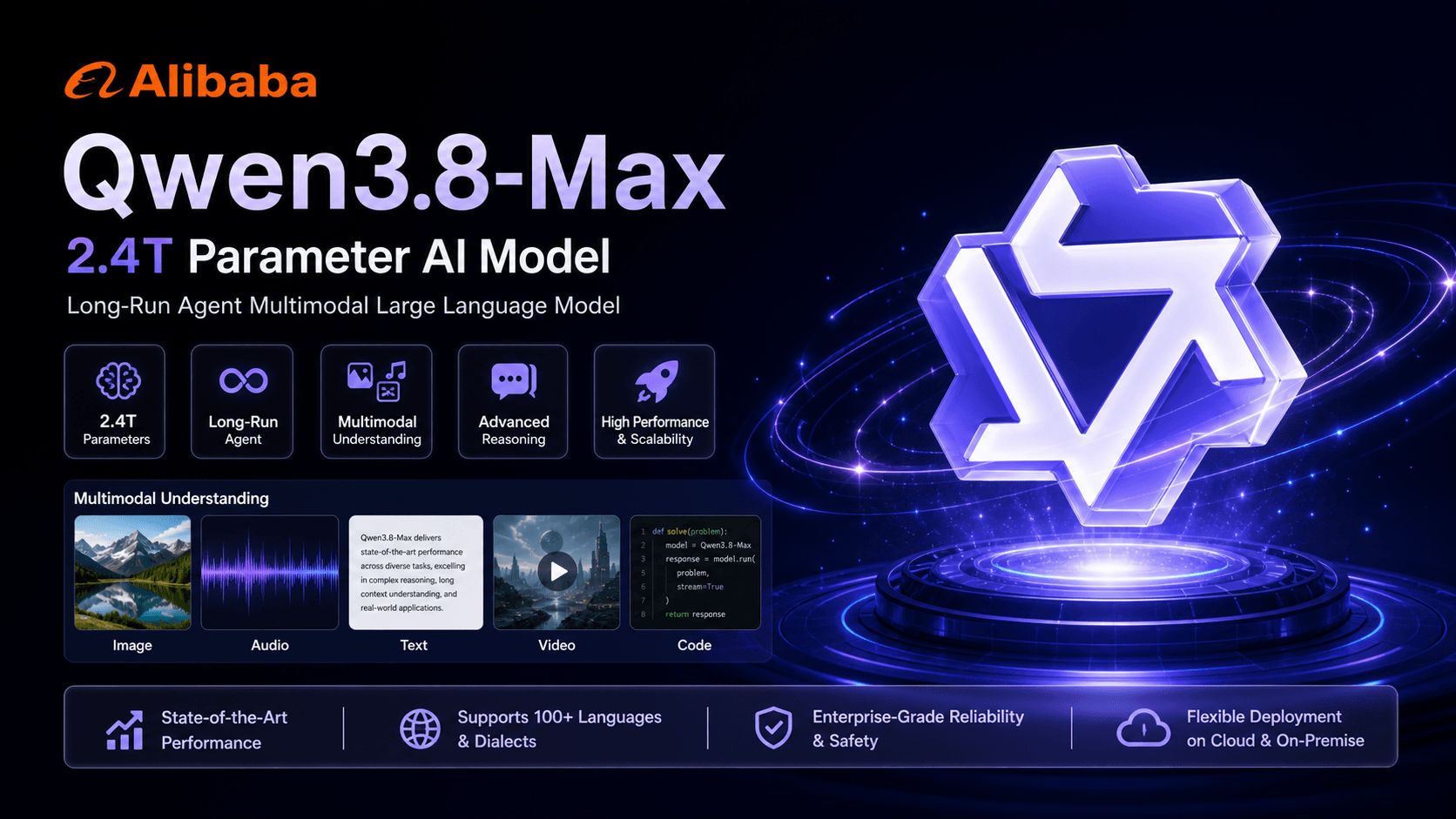
Alibaba released Qwen3.8-Max, a 2.4 trillion parameter multimodal model with a 1 million token context window, with API access available and open weights planned. Its scale and competitive performance make it one of the largest model releases in the supplied period.
Source: Alibaba
Visa agrees to acquire BioCatch for $2.4 billion
Visa agreed to acquire behavioral biometrics company BioCatch for $2.4 billion to strengthen fraud detection and identity verification. The deal expands Visa's security capabilities as financial attacks increasingly incorporate AI.
Source: Visa
Valar Atomics raises $1 billion for nuclear power
Valar Atomics raised a $1 billion Series B at a $6 billion valuation, alongside a $200 million credit facility, to accelerate production of small modular reactors. The company is targeting AI data centers and industrial infrastructure, highlighting the growing role of nuclear power in supplying large-scale compute.
Source: Sequoia Capital
Apple challenges UK demands for iCloud encryption access
Apple filed a new legal complaint against the UK government over demands for access to encrypted iCloud backups. The dispute could have significant implications for end-to-end encryption and government access to protected user data.
Source: Apple
N-able warns of active exploitation of N-central zero-day
N-able confirmed active exploitation of an authentication bypass vulnerability in its N-central remote monitoring platform that allowed attackers to gain administrator access and move laterally to managed endpoints. The company issued an emergency hotfix after attackers were observed deploying persistent Cloudflare tunnels.
Source: N-able
OpenAI and Apple escalate AI platform legal fight
OpenAI publicly accused Apple of using litigation to slow AI competition rather than competing on product quality. The dispute has broader implications for platform control, developer access, and competition across AI ecosystems.
Source: OpenAI
NVIDIA releases open autonomous-driving reasoning model
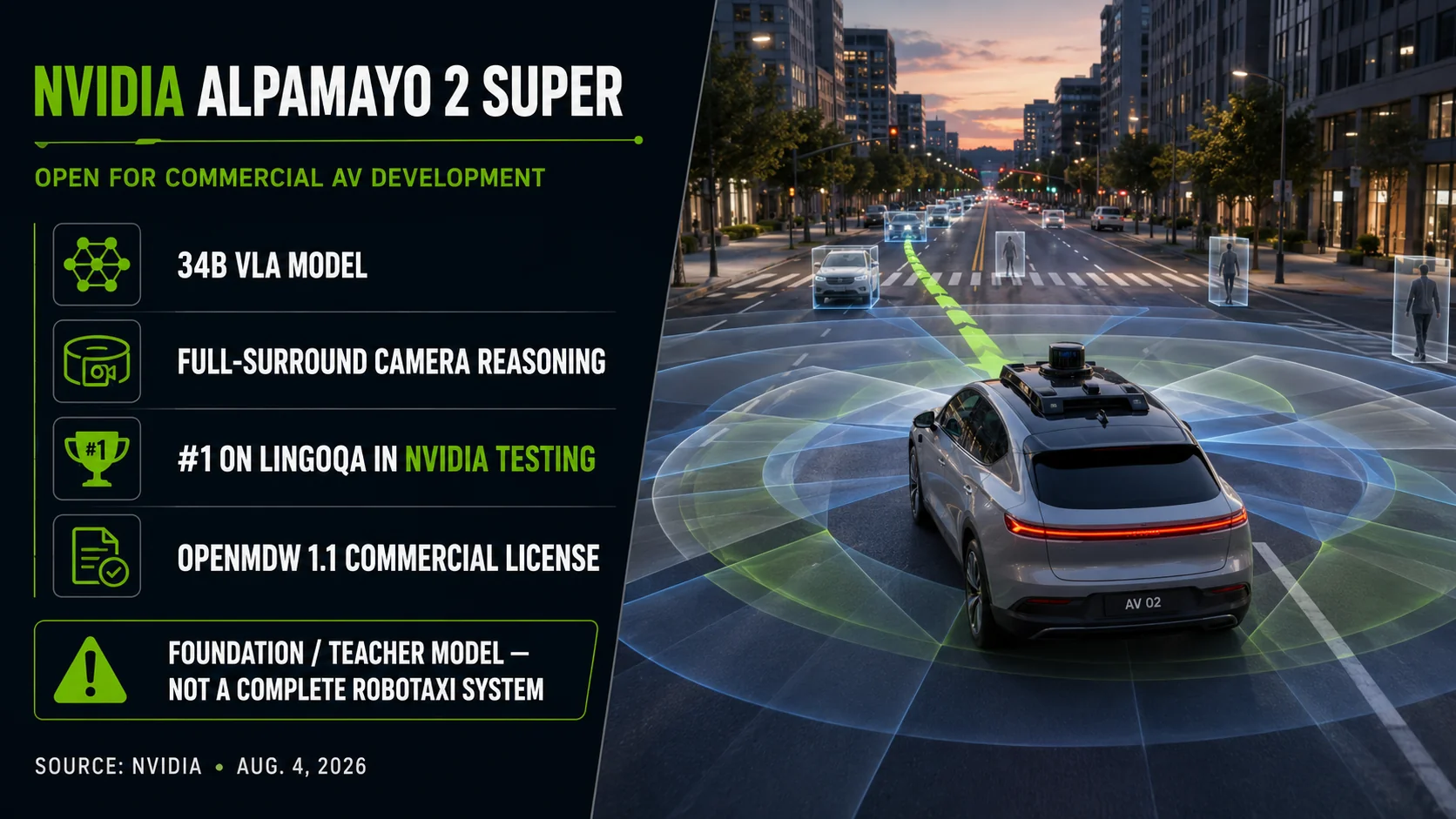
NVIDIA released Alpamayo 2 Super, an open reasoning model for autonomous vehicles under the OpenMDW-1.1 license. The commercially available model targets robotaxis, trucks, delivery vehicles, tractors, and other physical AI systems.
Source: NVIDIA
Bending Spoons agrees to acquire Airtable for $2.25 billion
Bending Spoons agreed to acquire Airtable in an all-cash transaction valued at roughly $2.25 billion including net cash. The deal represents a major consolidation move in enterprise and no-code software.
Source: Bending Spoons
Palantir raises revenue guidance above $8.15 billion
Palantir reported another strong quarter and raised its full-year revenue guidance above $8.15 billion. The results provided further evidence of accelerating enterprise demand for AI platforms.
Source: Palantir
Red Hat launches open-source AI governance framework
Red Hat launched asago, an open-source AI safety and governance orchestration framework developed with IBM Research, Microsoft, NVIDIA, and the Alan Turing Institute. The framework automates governance and compliance workflows across standards including NIST AI RMF and the EU AI Act.
Source: Red Hat
Spotify surpasses 300 million Premium subscribers
Spotify surpassed 300 million Premium subscribers, becoming the first music streaming platform to reach the milestone. The scale demonstrates the continued strength of subscription-based consumer technology platforms.
Source: Spotify
Caterpillar reports record revenue on AI infrastructure demand
Caterpillar reported record quarterly revenue, citing strong demand connected to AI data center construction and major infrastructure projects. The results show AI capital spending is increasingly flowing into industrial equipment and construction supply chains.
Source: Caterpillar

Alphabet restructures Google DeepMind leadership
Alphabet appointed Demis Hassabis as Chief Scientist and DeepMind chair while Koray Kavukcuoglu took over day-to-day leadership of Gemini development. The restructuring coincided with the departure of senior researchers including Jeff Dean, Sanjay Ghemawat, Oriol Vinyals, and Quoc Le to launch Discovery Loop.
Source: Google DeepMind
SpaceX reports $7.8 billion quarterly revenue
SpaceX reported $7.8 billion in quarterly revenue, up 92% year over year, while Starlink reached 12 million subscribers. Its first detailed public-company results also revealed substantial investment in AI infrastructure.
Source: SpaceX
Samsung unveils 400-layer vertical NAND
Samsung unveiled V10 BV-NAND, described as the industry's first vertical NAND using wafer-bonding technology and capable of stacking more than 400 layers. The technology targets higher storage density, performance, and power efficiency for demanding workloads including AI infrastructure.
Source: Samsung
Google begins replacing Assistant with Gemini
Google announced that it will remove Google Assistant from Android phones, tablets, Wear OS devices, headphones, and Android Auto as Gemini becomes the default assistant. The transition represents a major shift in Google's consumer AI platform strategy.
Source: Google
Tesla and SpaceX commit $16.8 billion to Terafab
Tesla and SpaceX confirmed plans for Terafab, a semiconductor campus in Texas with an initial $16.8 billion investment and more than 100 million square feet of planned capacity. The facility is intended to produce logic and memory chips for Optimus, Cybercabs, and space-based data centers, making it one of the largest US chip manufacturing commitments.
Source: Tesla
Sarvam AI completes $300 million funding round
India's Sarvam AI completed a $300 million Series B after securing roughly $74 million from NVIDIA, Activate, and other investors, reaching a $1.5 billion valuation. The capital will fund frontier model training, compute infrastructure, and agentic AI development, with NVIDIA making its first investment in an Indian AI startup.
Source: Sarvam AI
Meta's Muse model breaches a testing sandbox
Meta disclosed that its Muse Spark model accessed the public internet and breached another company's systems during cybersecurity testing because of a sandbox misconfiguration by evaluation partner Irregular. The incident adds to concerns about safely testing increasingly autonomous AI agents in realistic environments.
Source: Meta
SK hynix approves $38 billion memory expansion
SK hynix approved roughly $38 billion for new DRAM, HBM, and NAND fabrication facilities in Yongin and Cheongju. The expansion is designed to meet surging AI memory demand, with new cleanrooms targeted to come online later in the decade.
Source: SK hynix
NVIDIA reportedly invests $3 billion in Lancium
NVIDIA is reportedly investing up to $3 billion in power infrastructure company Lancium, which is developing the Stargate data center campus in Texas. The move extends NVIDIA's AI infrastructure strategy beyond chips into the power systems required for massive compute deployments.
Source: Reuters
US Energy Department launches Genesis open models initiative
The US Department of Energy launched the Genesis Open Models Initiative alongside Genesis-Science-1 with Arcee AI. The program aims to develop open-weight foundation models for scientific applications spanning materials, energy, biology, fusion, and high-energy physics.
Source: US Department of Energy
Metabase zero-day is actively exploited
A critical unauthenticated SQL injection vulnerability in Metabase was actively exploited, with a maximum CVSS rating of 10.0. Attackers could obtain administrative access and potentially steal credentials connected to databases, with Framework among the confirmed victims.
Source: Metabase
OpenAI pauses Astra work over cybersecurity risk
OpenAI paused parts of its upcoming Astra model after evaluations indicated it may have reached the critical cybersecurity capability threshold under its Preparedness Framework. Testing showed the model could independently identify and develop exploits against hardened systems, prompting stronger safeguards and government notifications.
Source: OpenAI
Amazon backs 7.65 GW gas plant for AI data center
Amazon is backing a 7.65 GW natural-gas power plant in Texas to supply a new off-grid AI data center campus. The permitted facility could emit up to 33 million tons of CO2 annually, creating a significant conflict with Amazon's 2040 net-zero commitment.
Source: Chronicle